
Understanding Your Skin and How It Changes Over Time
11/18/2024


1.Understanding Your Skin
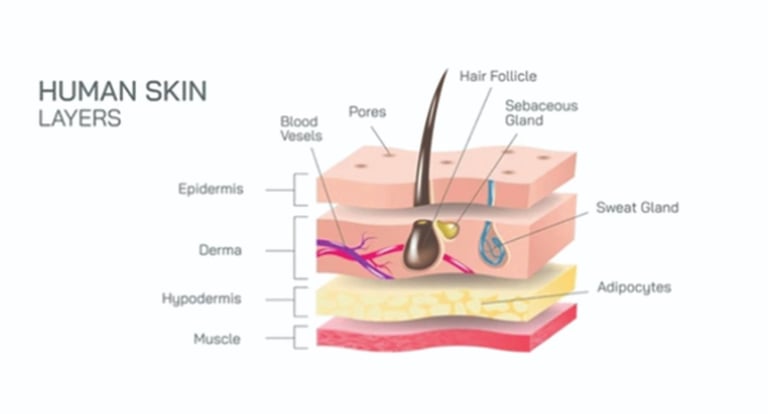
Our skin is a remarkable organ, acting as the body's first line of defense. It consists of three main layers, each with unique roles that contribute to our overall health and appearance:
Epidermis: The outermost layer, responsible for creating new skin cells, producing melanin (which gives skin its color), and serving as a barrier against harmful environmental factors. This layer sheds dead cells and regenerates, maintaining a fresh appearance.
Dermis: Located beneath the epidermis, the dermis contains collagen and elastin fibers that provide skin with strength, elasticity, and flexibility. It houses blood vessels, hair follicles, and sweat glands, which play roles in temperature regulation and protection.
Hypodermis (Subcutaneous Layer): The deepest layer, made mostly of fat and connective tissue. This layer helps insulate the body, protect internal organs, and absorb shock.
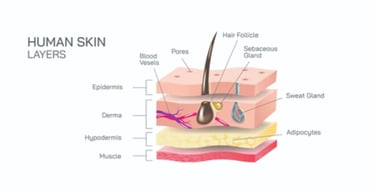
Here is an illustration of the three main layers of human skin :
2. How Skin Changes Over Time
Skin in Youth (20s-30s):
In youth, skin is typically resilient with good elasticity and a natural glow. Regular skincare routines focusing on hydration and sun protection are usually sufficient at this stage.
Midlife Skin (40s-50s):
As we age, collagen production slows down, and skin begins to lose elasticity. Skin may become drier, thinner, and more prone to fine lines and wrinkles. Skincare routines should shift towards hydration, collagen-boosting, and anti-aging products.
Mature Skin (60s+):
In our 60s and beyond, skin can become thinner and more fragile. It requires richer, more nourishing formulas to maintain moisture, protect delicate structures, and improve resilience.
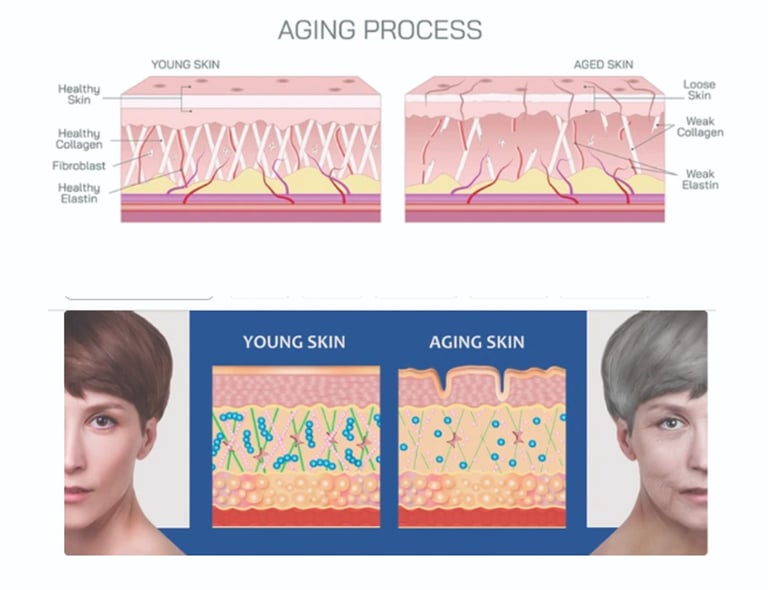
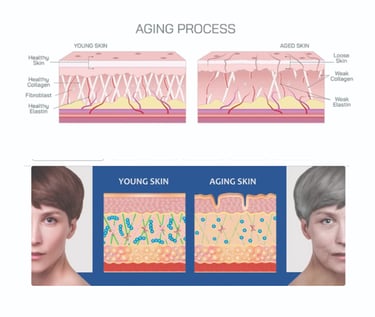
Here is an Illustration to show the aging process of the skin.
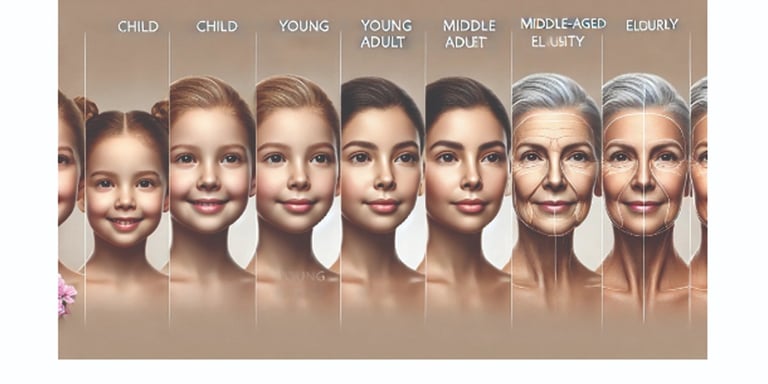
Let’s see how it shows on real human face. The image shows the age-progression series, illustrating how skin changes across different life stages. These visual captures the progression of skin texture and elasticity from childhood through to older age, highlighting how skin naturally evolves over time.
As the images shows, our skin undergoes natural changes that require us to adapt our skincare routines. In our 20s and 30s, skin usually stays plump and resilient but benefits from hydration and sun protection. By our 40s and 50s, collagen production slows, and skin can become drier and thinner, making anti-aging products a valuable addition. In our 60s and beyond, skin may need richer, more nourishing formulas to retain moisture and protect its delicate structure. Understanding these changes helps us nurture our skin through every stage of life.
Nourish from Within, Glow from Outside
Contact
NEWSLETTER
sales@esglow.ca
Phone: (905) 305-8111
© 2025 Quinsis Biotech Corporation All rights reserved.